Why has the human heart got four chambers?
1 CHAMBER
OK, so we need a pump to circulate blood through the lungs, the organs, muscles, brain and Clapham Junction.
So, we get a pump, fill it with blood, squeeze it and Whoosh – off it goes all round the system.
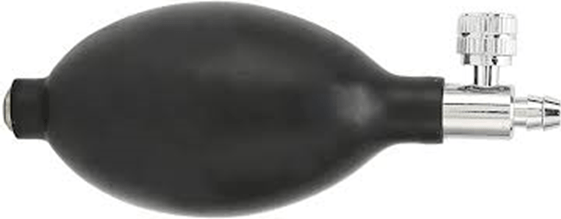
Job done.
Er, slight problem.
This pump will be made of muscle. Muscle is contractile only. It does not self-extend. In our arms and legs, we have two sets of muscles for each action; one set to flex a joint, and another set to extend or re-set the joint. For the knee, we have the hamstring set to flex the knee and the quads to extend it.
If we put another set of muscles in to expand the heart chamber and suck in a new charge of blood, they’re going to need to be anchored to something solid, probably the ribcage. That will be tricky as the ribs are moving and flexing all the time, balancing that motion with the expander muscle will be tricky.
But wait, here’s a solution:
2 CHAMBERS
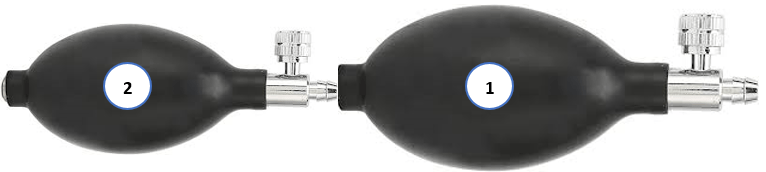
Now we’re cooking. Or pumping.
Chamber 1 contracts and whooshes blood all around the system.
With enough pressure left over to force a charge of blood into Chamber 2.
All Chamber 2 has to do is pop the blood into the now empty and relaxed Chamber 1, expanding it ready for the next woosh round the pipes. A simple one-way valve between the two chambers, job done.
But now we have a problem
Dammit.
THE LUNGS.
Curses.
We pumped the blood round and round, then ran out of oxygen.
And dropped dead.
Not good.
OK, so now we pipe in the lungs, so the blood can be whooshed up there and pick up new oxygen, get rid of carbon dioxide, and we’re back in business.
Uh oh
Dropped dead again.
Now, here comes the engineering, so listen up and stop picking your nose.
GAS EXCHANGE
In order to get oxygen into and carbon dioxide out of the blood, it needs to pass through the cell walls, the pipe walls, of the lung pipework.
So, now we have a system where blood is pumped round the body, using up oxygen and picking up carbon dioxide, and then a second set of pipes running up to and through the lungs.
PRESSURE PROBLEMS
But here’s the thing.
It takes quite a bit of pressure to pump blood around the body.
And we have to pick up oxygen first.
So high pressure blood is sent to the lungs, to pick up oxygen.
But, there has to be enough pressure not only to circulate the body, but also the lungs.
That means thick wall pipe. And thick wall pipe does not do gas exchange very well. We need pipe walls about one cell thick for good gas exchange, and that won’t hold the pressure.
In order to run the lungs and body on the same pipework circuit, we’d need lungs the size of an elephant’s or at least a large bull.
Awkward.
But the designer came up with a neat solution.
4 CHAMBERS
In fact, its two twin chambered pumps.
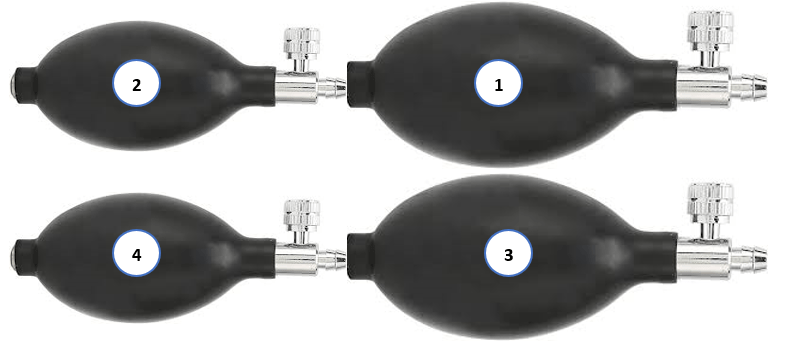
One pair runs the body circuit and the return line is fed into a second pump, which then sends blood up to the lungs.
Neither pump has to run at the full pressure for the entire system, body and lungs.
That means the pressure in the lungs can be supported by single cell thickness pipework.
OTHER CLEVER STUFF.
Synchronising two pumps is not all that easy, but if they’re built into the same unit – job done.
Matching the pressures in the two circuits is also tricky if one pump is at a different level from the other. There is a difference in the static head, which could affect the delicate balance between the two circuits. Again, popping them in the same unit means they are always at the same level. Problem solved.
Now, this pump is pretty vital to the organism. Obvs.
So, stick it somewhere behind an armoured cage, called the ribs, to avoid accidental and battle damage.
Some of you may have a brain. This is regarded as quite a useful thing. It runs on blood. Lots of it.
So stick the pump as close to the brain as is reasonable without exposing it.
Put the whole lot, lungs and pump, up near the front of the body. This also reduces the pipe-run from the air inlet, mouth and nose, to the processing area, and shortens the exhaust tract at the same time.
By the way, the brain, the master controller, is housed in an armoured fighting top, where the main sensors, eyes, ears, nose, mouth, are on very short comms links, the nerves. This turret is highly mobile, able to rotate and tilt as far as possible. It would be inhibited if the main pump were moved any closer to it.
Pretty neat design job, no?
I would have liked to do better visuals, but I’m still getting used to this.
 Flights of the butterfly
Leave a comment